
Community
For over 15 years, I have specialized in the intersection of UX and market research, building environments where brands and consumers connect.
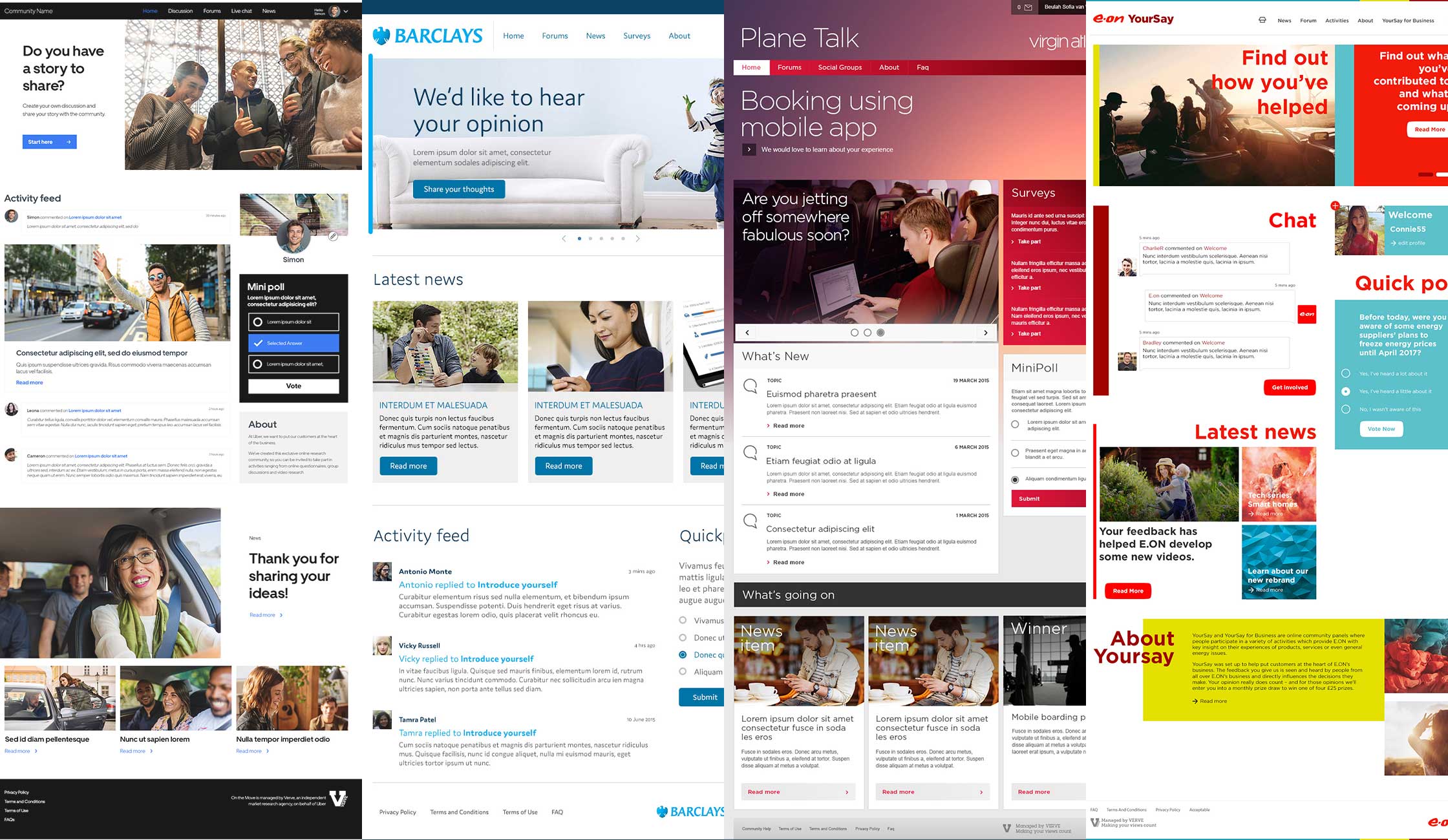
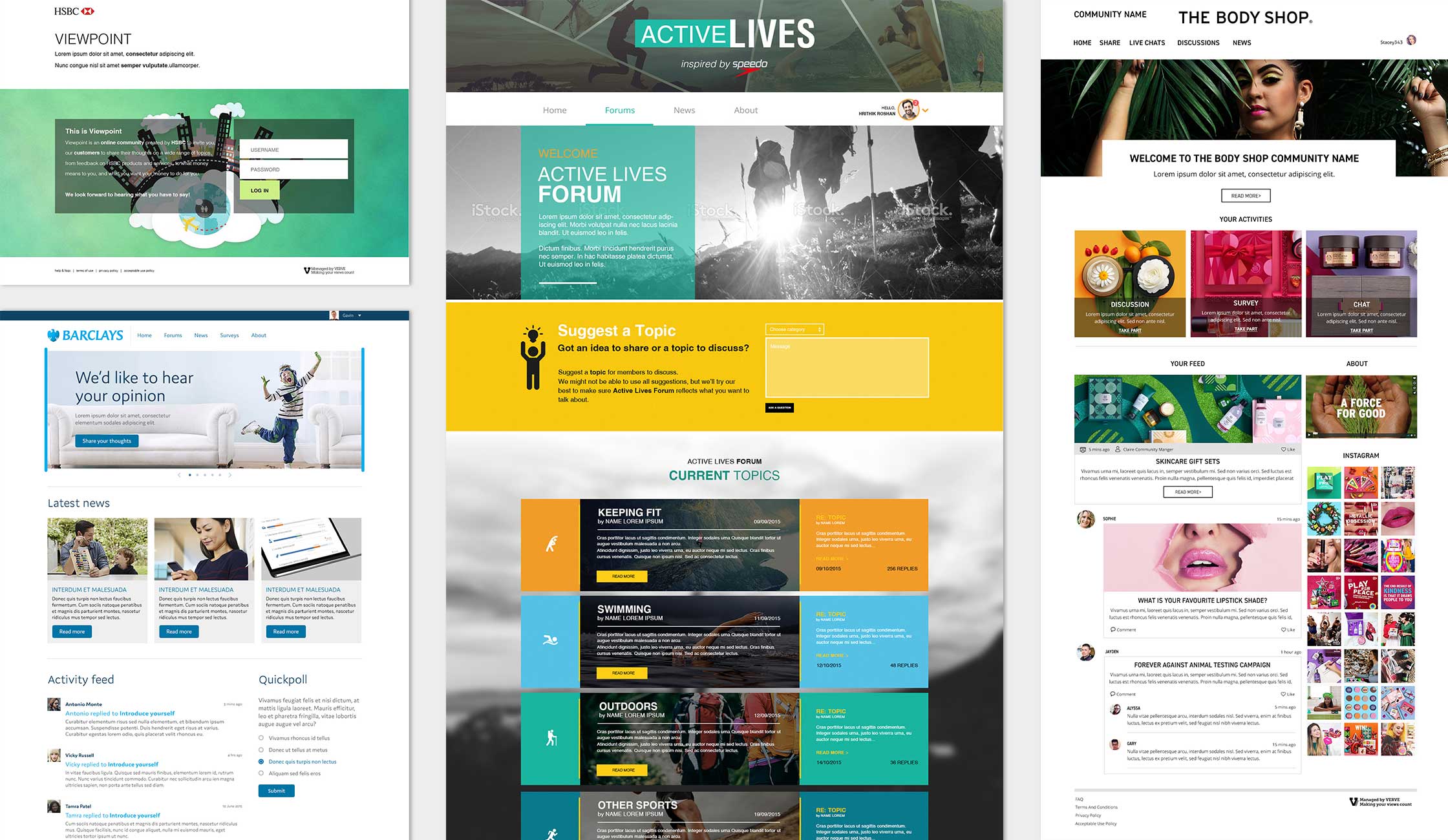
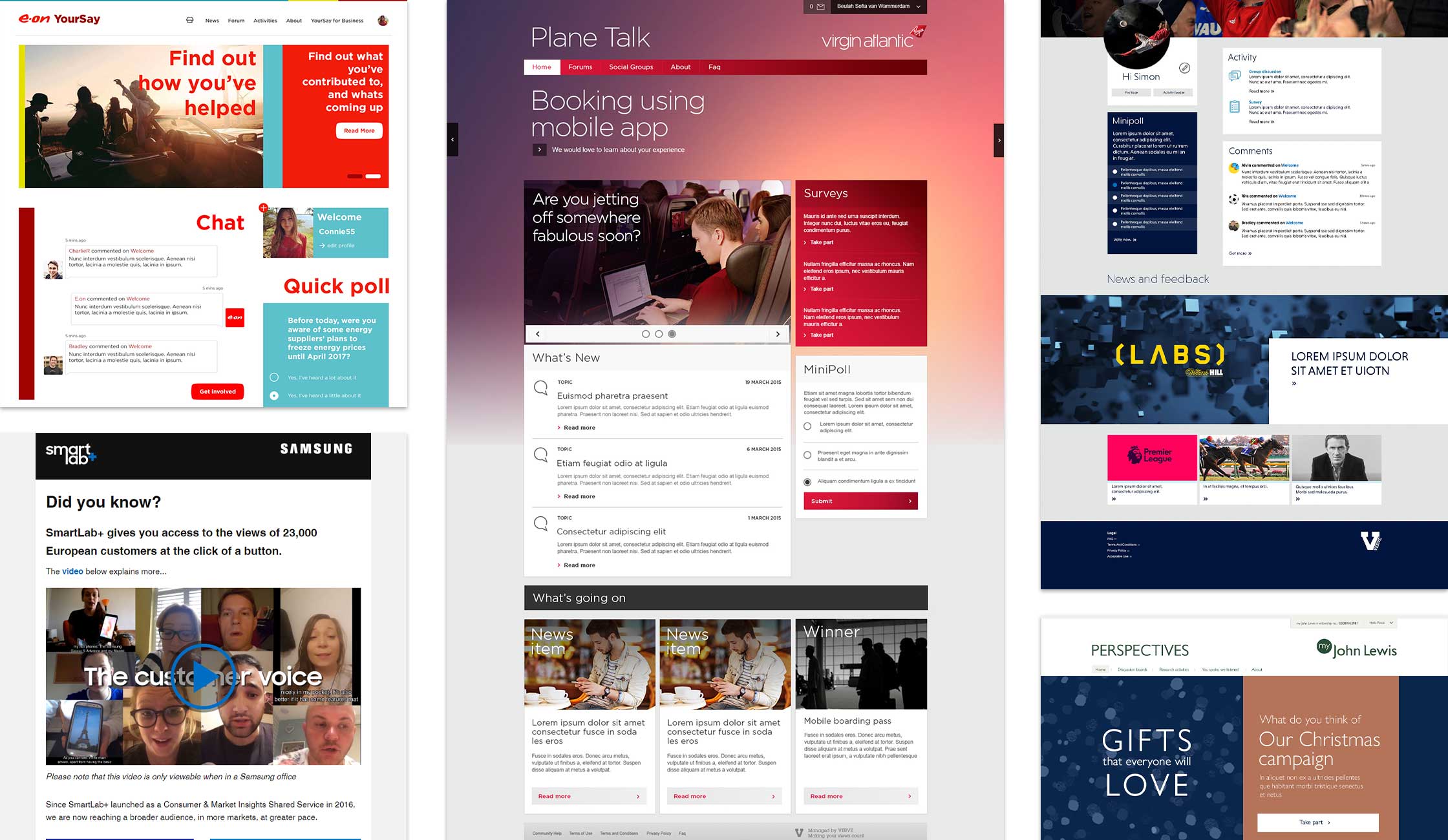
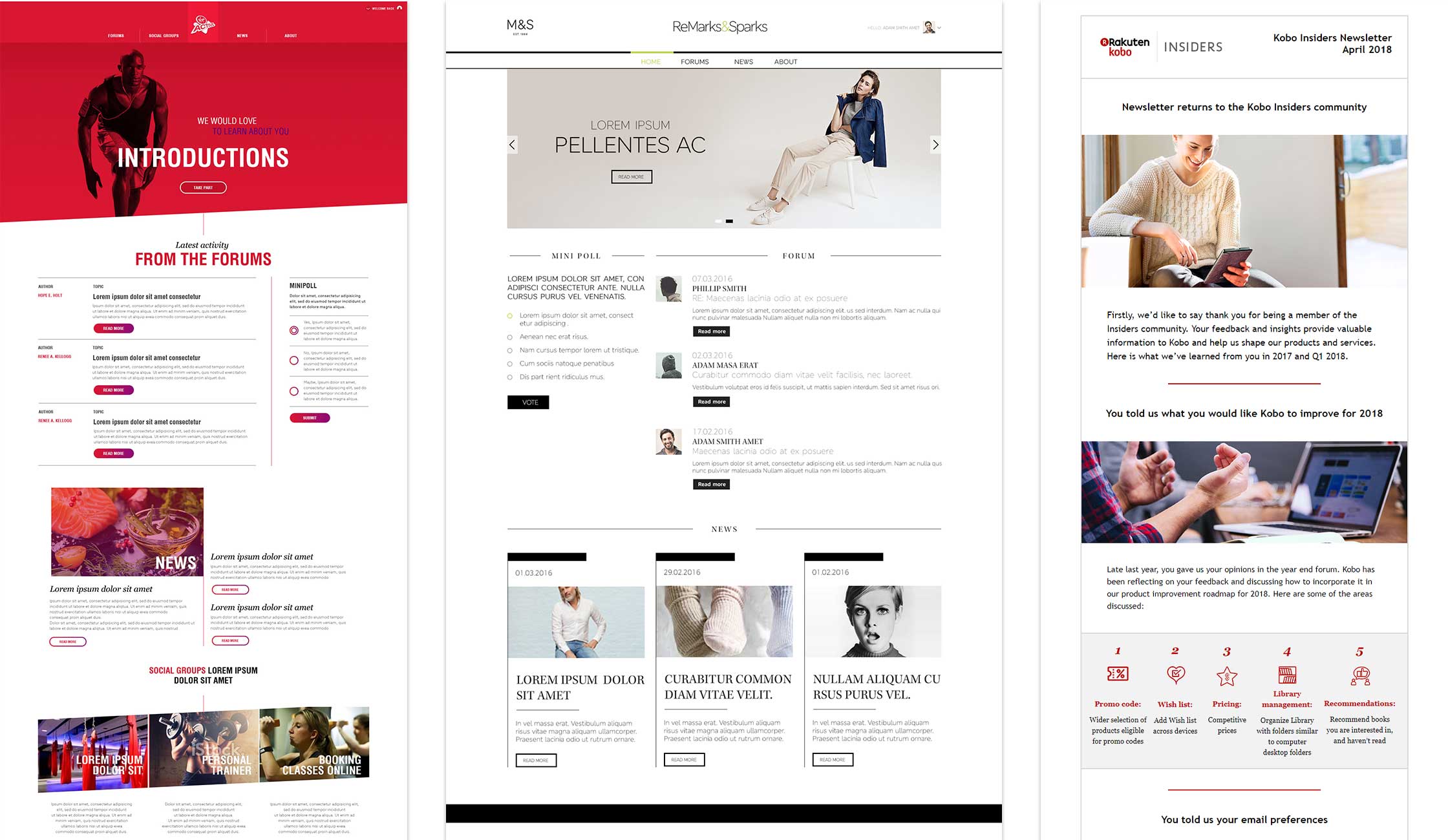
At Verve, this meant creating immersive, brand-aligned research communities that felt like a natural extension of a client’s identity, rather than a sterile third-party tool.
The Challenge
Our delivery was hitting a "quality vs. speed" bottleneck. We were using legacy tech remnants of HTML tables and rigid frameworks that required manual, bespoke builds for every new community.
- Timeline: A standard build took six weeks from kickoff to launch.
- Cost: High manual overhead ate into project margins.
- Agility: The slow setup delayed the actual research, meaning clients had to wait longer to get the insights they were paying for.
The Goal
To increase profit margins and decrease the "time-to-insight" by modernizing our technical stack. We needed a system that offered the speed of a template with the soul and functionality of a bespoke build.
My Role & Process
I led the transition from a manual workflow to a systems-based approach. I acted as both the lead designer and the primary architect of the new framework, managing the rollout across the wider team.
- Audit & Modernization: I moved our ecosystem away from legacy code toward a responsive, modular framework.
- Tool Adaptation: I looked for creative ways to extend existing tech for example, re-engineering blog modules into dynamic community forums.
- Feature Co-creation: I collaborated closely with developers to build essential utility features, such as custom data export tools, ensuring the backend was as robust as the frontend.
- Engineering Handoff: Documented the component library with developer-ready specs including interaction states, responsive behaviour breakpoints, and a QA checklist for each module type. This removed build ambiguity at handoff and meant developers could produce accurate outputs from first-pass briefs eliminating the revision cycles that had previously added weeks to each project.
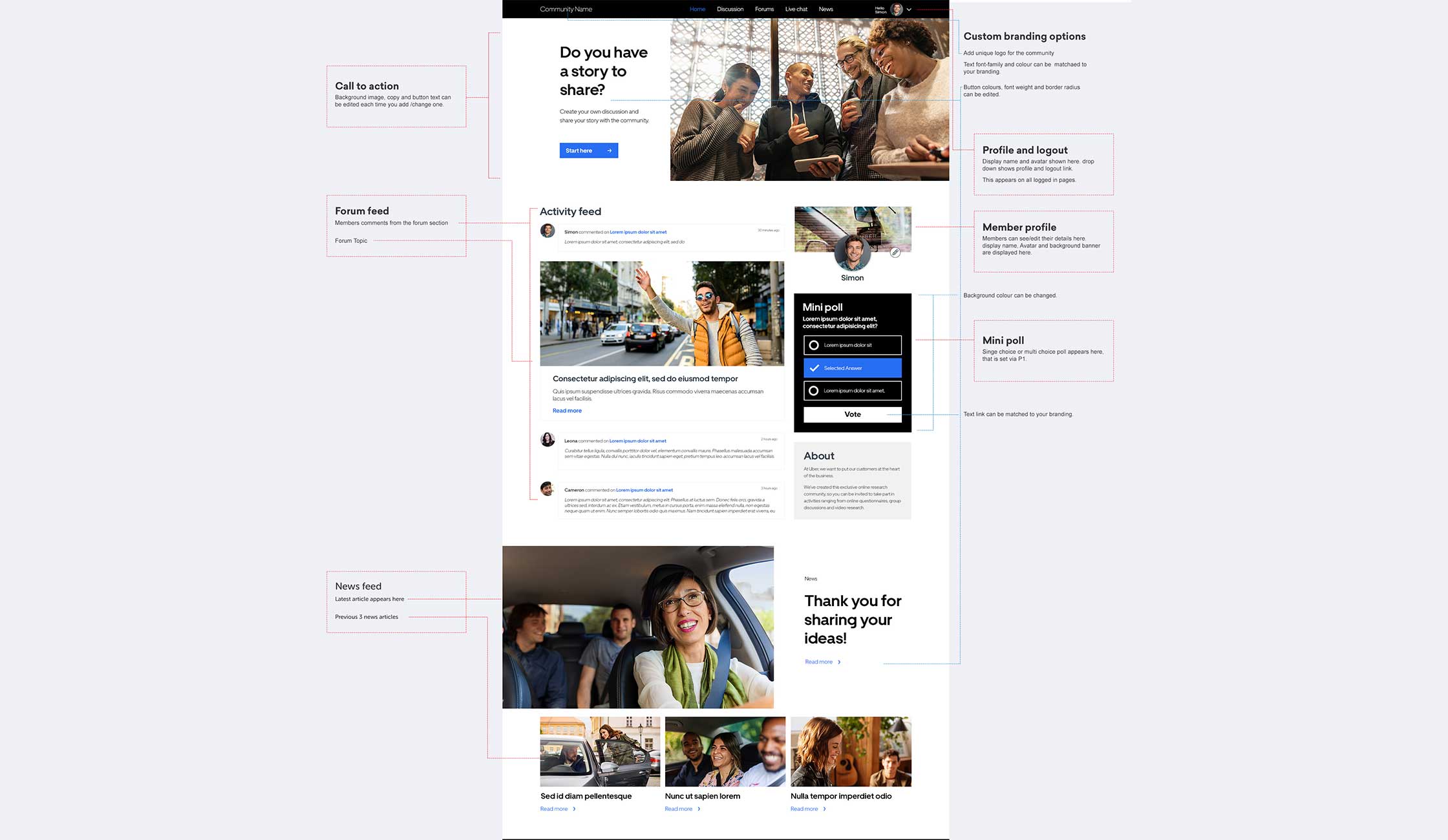
- Engagement Design: I integrated interactive "engagement devices" (heatmaps, pinboards, and virtual shopping shelves) into the modular library so they could be deployed instantly rather than built from scratch.
Programme Management & Cross-Functional Delivery
Running this system across a live portfolio required as much programme management rigour as design thinking. At peak, I was coordinating 20 concurrent community builds across five distinct clients within a single five-month window owning prioritisation, timeline management, risk tracking, and stakeholder communications simultaneously across all workstreams, with zero missed launches.
I was the primary connector between designers, developers, and senior client stakeholders, translating design specifications into developer-ready technical briefs, managing competing priorities across projects, and resolving conflicts before they surfaced as delivery risks. Each new community required coordinating design QA, CMS configuration, localisation, and client approval workflows in parallel.
Key Rationale: The Modular Shift
The strategy was to "standardize the invisible and customize the visible." By creating a library of pre-validated components, we could focus our creative energy on the brand-specific nuances and high-touch features that drove participant engagement, rather than debugging table layouts.
Outcomes & Impact
The rollout of this system fundamentally changed how we delivered work:
- Speed: Reduced build times by 83% (from six weeks to just seven days).
- Profitability: Significantly lower production overhead per project, directly boosting margins.
- Performance: Quality remained robust; we saw no dip in consumer engagement metrics, and the faster turnaround allowed researchers to start gathering data almost immediately.
- Scalability: The wider team was trained on the system, removing me as a single point of failure and allowing the agency to handle a higher volume of concurrent projects.
- Concurrency: The system enabled me to manage 20 simultaneous projects across 5 clients within a 5-month window, a volume that would have been operationally impossible under the previous bespoke build model.
Reflections
This project taught me that true "creativity" in a B2B context often lies in the systems behind the work. It is as much about the operational architecture built around the design team that enables the creative quality to scale. By increasing the speed-to-market, we didn't just make prettier sites; It made the business more competitive and the research more immediate.
More works


Let’s talk
Whether you're hiring, planning a project, or just weighing up an idea - I'd love to hear from you.


